Why Facebook Groups Don’t Feel Like Community Anymore
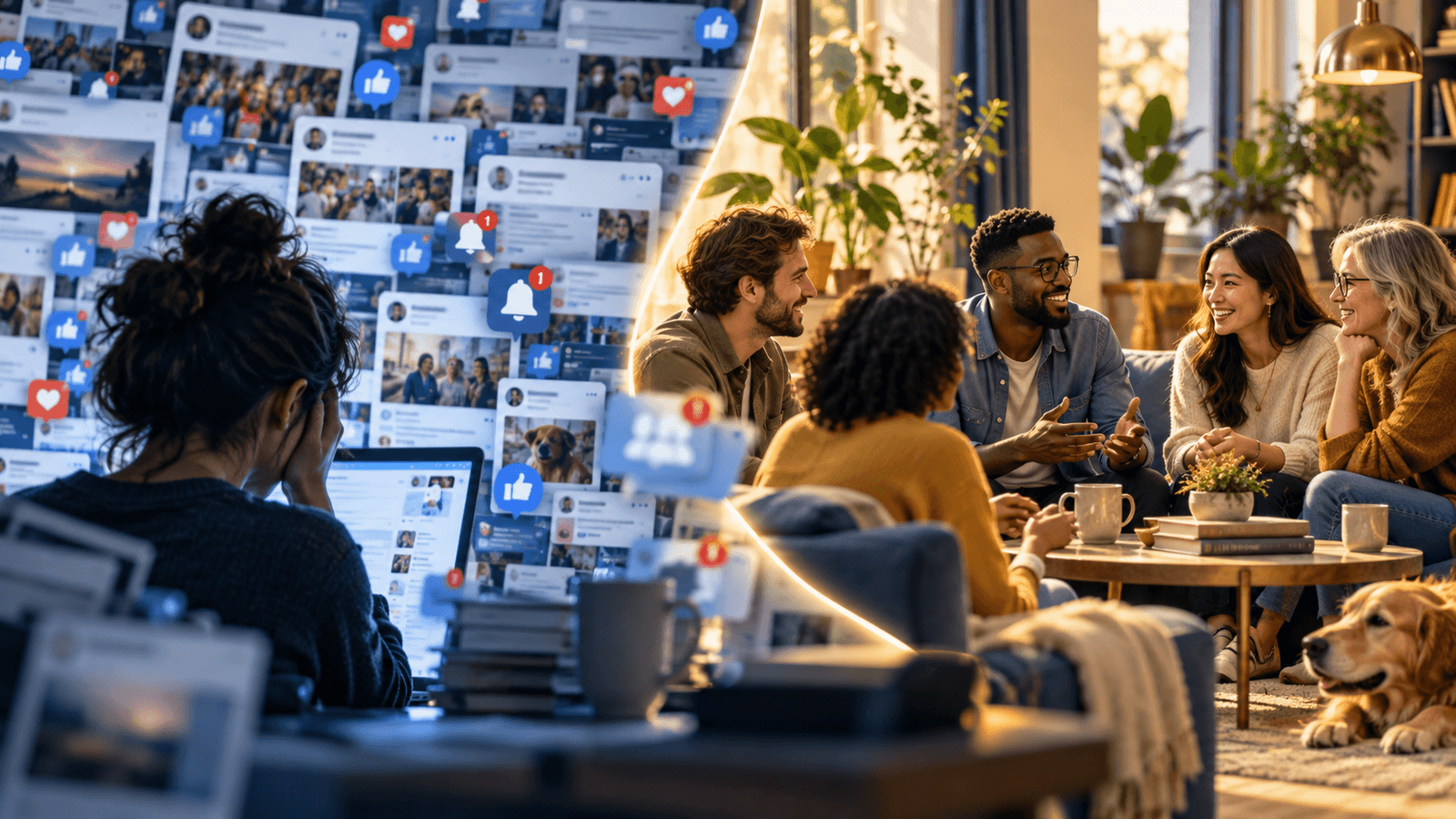
Facebook Groups are still home to countless valuable communities. But many people have joined groups they rarely revisit, muted notifications, or watched meaningful discussions disappear into a much larger feed. The problem is not that groups stopped existing. It is that community increasingly competes with everything else happening on the platform.
The group is not the whole environment
A Facebook Group exists inside a platform also built around friends, video, Pages, Marketplace, recommendations, advertisements, and many other forms of activity.
That convenience makes groups easy to join, but it also means community attention is constantly being pulled back into the larger network.
Joining is easier than belonging
Low-friction membership can produce very large groups, but membership numbers do not necessarily translate into active community. People can join with one click and then disappear.
Belonging usually requires recognizable people, recurring interaction, shared expectations, and reasons to return beyond another notification.
Feed design can bury continuity
Community discussions work best when members can follow context over time. Algorithmic ranking, repeated suggestions, and a busy surrounding feed can make conversations feel temporary.
That is one reason some community builders prefer spaces where discussions and member relationships are the primary product rather than a feature inside a broader content network.
Community leaders increasingly care about control
Administrators also think about moderation tools, member communication, data access, discoverability, and how dependent the group is on decisions made by the larger platform.
No platform gives a community complete independence, but purpose-built environments can offer a different balance of control and focus.
The next generation of community may feel more intentional
People are not abandoning online groups. They are becoming more selective about which spaces deserve their attention.
ECCOOZS is approaching community as part of the core social experience, with discussions, discovery, businesses, creators, and live conversation designed to reinforce participation rather than compete with it.