What Happened to Normal Social Media?
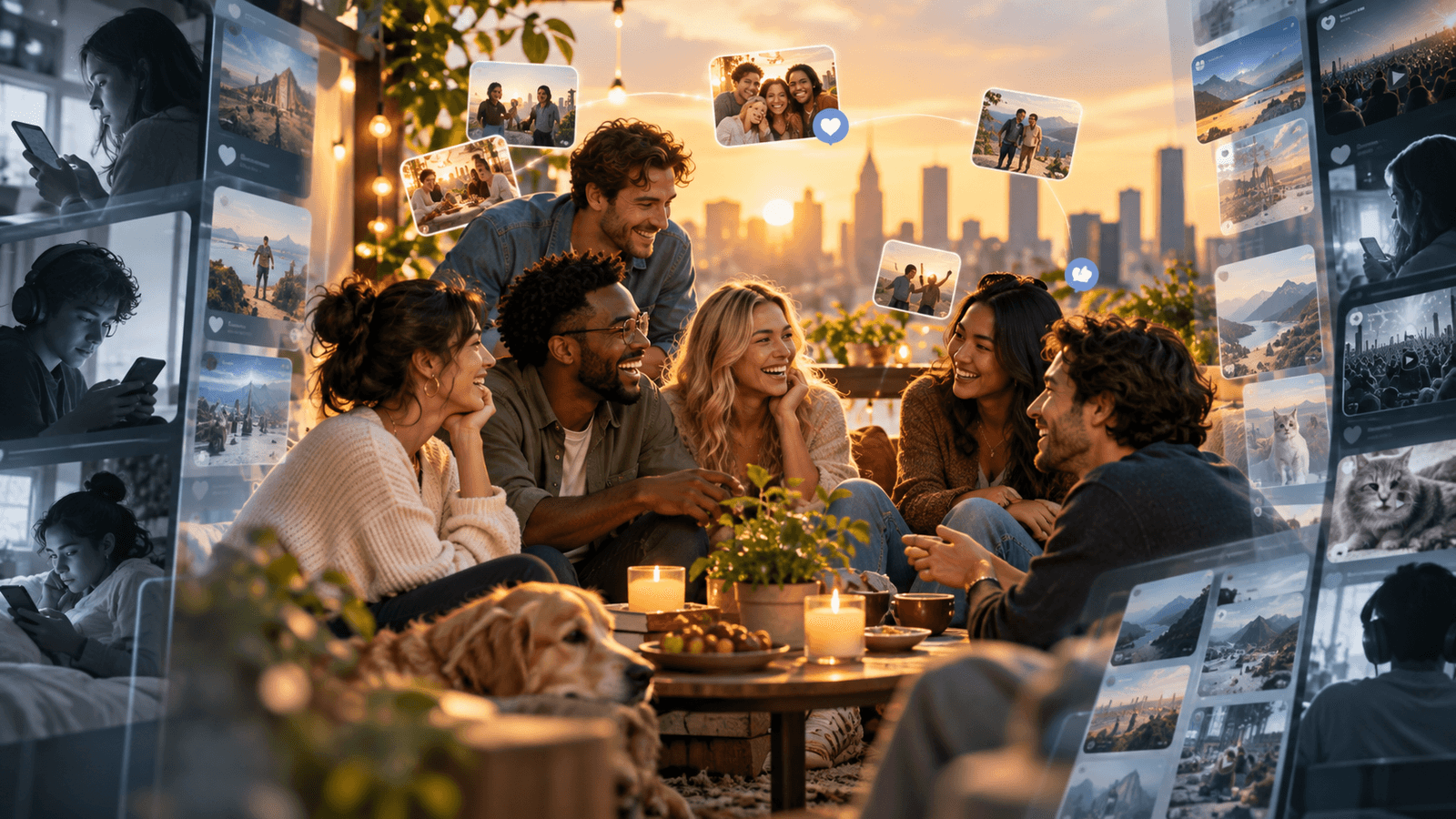
When people say they miss 'normal social media,' they usually do not mean they want the internet frozen in 2010. They are describing a feeling: posting without performing, seeing more people they intentionally followed, having conversations that lasted, and using a platform as a social place rather than a nonstop entertainment channel.
The social graph stopped being the whole product
Early social networks were largely organized around friends, followers, groups, and pages people deliberately chose. Modern networks increasingly supplement that graph with recommendation systems designed to introduce unfamiliar content.
That broadened discovery dramatically, but it also changed the emotional experience of opening a social app.
Content became professionalized
Creators raised the quality of online media, and businesses learned to produce increasingly polished content. Over time, ordinary users found themselves sharing space with professional production, growth strategies, influencer marketing, and brand campaigns.
The result can be entertaining while also making a casual status update feel strangely out of place.
People became audiences
Many social products now treat users primarily as viewers. The feed is optimized to keep delivering material, often without requiring users to post or interact with anyone they know.
That is excellent for consumption but not necessarily for building relationships.
The appetite for real interaction never disappeared
Private chats, niche communities, group discussions, live audio, and smaller networks remain popular because people still want interactive spaces.
The opportunity is to combine modern discovery with the feeling that participation still matters.
A different kind of social network is possible
There is no need to choose between old-fashioned features and modern technology. The stronger question is which incentives, tools, and community structures make people feel socially present.
ECCOOZS is being built with that goal in mind: social interaction first, with business, creator, and discovery tools integrated around the community rather than replacing it.